

Advertisement 
CHAMBER MUSIC CITY’S 2026-2027 SEASON OPENER AT THE CLEMENTINE

Chamber Music City launched its 2026–27 season on October 8th, 2026, with an extraordinary program featuring works by composers Johannes Brahms, Osvaldo Golijov, Clara Schumann, as well as David Bruce, made possible through the generous sponsorship of Yoko and John Greeney. Held at The Clementine on Charlotte Avenue, the evening stood as a testament to the dedication and artistic vision of Chamber Music City’s founding artistic director—and the evening’s percussionist—Ji Hye Jung. Beyond her remarkable contributions on stage, Jung served as an exceptional host, greeting the audience with an infectious enthusiasm and an inviting, warm demeanor that set a welcoming tone for the entire night.
In the social area, guests gathered over drinks and conversation while a pre-concert talk led by musicologist Carrie Tipton took place alongside the gathering. The venue itself offered a big, open, and visually appealing setting with excellent acoustics that framed the night’s music beautifully. Throughout the concert, the audience remained deeply attuned and intently focused on every musical nuance, creating a shared concentration that elevated the entire live experience. That rapt attention provided the ideal setting for a program rich in historical depth, timbral invention, and vivid narrative breadth.
The Program & Performance:
Johannes Brahms: Clarinet Trio in A Minor, Op. 114
Jose Franch-Ballester, clarinet; Clancy Newman, cello; Gloria Chien, piano

Johannes Brahms’s Clarinet Trio in A Minor, Op. 114 occupies a rare, reflective corner of the chamber music canon. In early 1890, a 57-year-old Brahms declared his retirement from composition, believing his creative vitality was exhausted. However, after hearing virtuoso clarinetist Richard Mühlfeld in early 1891, Brahms was so inspired by Mühlfeld’s playing that he emerged from retirement to compose this Clarinet Trio alongside many of his late-period chamber works.
Hearing the piece performed by Jose Franch-Ballester, Clancy Newman, and Gloria Chien offered a glimpse into Brahms’s rejuvenated imagination. From the opening movement, the trio grounded the work’s twilight mood in exceptional timbral cohesion. Franch-Ballester’s rich and beautiful chalumeau register, seamlessly intertwining with Newman’s highly expressive cello playing. Rather than treating their respective parts as competing solo lines, Franch-Ballester and Newman merged their parts with such absolute precision that it yielded a striking, effortless intimacy, blurring the line where one timbre ended and the other began.
Chien’s work at the keyboard provided the ideal structural foundation for the clarinet and cello’s complex dialogue. Handling Brahms’s dense piano textures with clarity and light-handed restraint, Chien maintained a fluid, rolling momentum in the Adagio that gave the wind and string lines room to expand without ever losing shape. The trio navigated the work’s metric shifts in the final Allegro with a dense, weighted precision, capturing both the melancholy and the underlying rhythmic defiance imbued in these chamber works of Brahms’s latest period. It was an exquisite execution of one of chamber music’s most deeply personal scores.
Osvaldo Golijov: Mariel
Clancy Newman, cello; Ji Hye Jung, marimba
 Osvaldo Golijov’s Mariel brought Newman back to the stage alongside percussionist Jung in a focused, melancholic elegy written in memory of the composer’s friend, Mariel Stubrin. The cello part relies on sustained, vocal-like cantabile lines, subtle glissandi, and wide dynamic shifts to carry its Brazilian-inspired melody. Jung’s marimba provided the harmonic foundation through warm, rolling tremolos and delicate mallet articulation. Rather than competing, Newman’s grounded tone merged directly into the marimba’s resonant decay, creating a tightly unified, intimate dialogue built on subtle phrasing and shared breath.
Clara Schumann: Nocturne in F Major, Op. 6, No. 2
Gloria Chien, piano
Clara Schumann’s Nocturne in F Major, Op. 6, No. 2 brought Gloria Chien to the keyboard for a memorable solo performance. Formed within the ethos of 19th-century middle-class society—where women faced systemic barriers to professional recognition—Schumann remains one of the period’s most accomplished musicians and composers, and this piece has rightly entered the core piano canon.
Chien’s performance relied on precise physical control at the piano, establishing an initial, diffuse texture from which the melody emerged not as a stark entry, but as an organic emollient seeping out from the initial texture. That subtle transition gave the opening an enigmatic quality, handled with enough restraint to keep the musical effect focused and clear, while successfully setting the trajectory for the entire piece as it unfolded. Chien played beautifully.
David Bruce: States of Glory (US Premiere)
Jose Franch-Ballester, clarinet; Clancy Newman, cello; Ji Hye Jung, marimba
The centerpiece of the program was the US premiere of David Bruce’s States of Glory, bringing back Franch-Ballester, Newman, and Jung together for an expansive, seven-part cycle. Composed for America’s semiquincentennial, this major work functions as a meditation on hope and the American dream, using the traditional folk song “This Train Is Bound for Glory” as its primary thematic material. Bruce draws on the tune’s varied lineage—from its sacred roots and associations with the Underground Railroad to Woody Guthrie’s secular, humanistic adaptations and versions by Ella Jenkins—to explore competing definitions of freedom and destination.
Sonically, the score’s most striking dimension is its integration of field recordings, featuring the heavy, rhythmic chugging of steam engines; steel rail friction; and ambient train yard noise. Played through the hall, these recorded textures did more than provide programmatic atmosphere; they physically filled the space, instilling a palpable sense of movement and physical transit. Crucially, these sounds tapped into an elusive, vicarious nostalgia—a longing for an industrial and pioneering landscape that no contemporary listener directly experienced, yet one deeply embedded in the American cultural subconscious.
Across its seven movements, Bruce structures these acoustic and multimedia elements into a clear narrative arc:
1. “Bound for Freedom I” opens the cycle with sparse, tentative acoustic fragments executed with deep expressivity by Newman on cello. The movement begins over recorded tracks of a chugging steam engine building momentum, which cross-dissolves into a vintage recording of the original “Bound for Freedom.” As the movement unfolds, it creates a sonic parfait—layering sound bites of the song’s different historical variants with Newman’s cello lines, which grow from those initial sparse fragments into sweeping, expansive phrases complete with rich double stops—functioning as a compelling thesis statement for the entire piece.
2. “Riding the Blinds” shifts character dramatically, driven by repeated, fast, declamatory arpeggiated figures from the clarinet. Jung on percussion frames these gestures with rhythmic pattern featuring a coordinated array of metallic scraping sounds. This pattern is suddenly interrupted as Franch-Ballester deploys grinding, abrasive glissandos that emulate a train whistle, evoking the spirit of 1930s clarinet style and calling to mind the opening of Gershwin’s Rhapsody in Blue. Jung follows with a buoyant, walking bassline pattern on the marimba, shifting the mood entirely. A feature of note—eliciting imagery of nimble travelers jumping from car to car while in motion—is a section where the clarinet and cello employ an almost heterophonic texture; here, the cello glisses between natural harmonic tones while the clarinet plays the figure straight. While “riding the blinds,” or illegally sneaking onto the unlit train platforms between baggage cars, was a dangerous and precarious practice born of economic desperation, the music here refrains from treating the topic as a somber transgression. Instead, it captures the grit and urgency of traveling unseen through a playful, spirited lens, leaning into the adventurous thrill of freedom to travel. As the momentum eventually begins to decelerate like a train pulling into a depot, Franch-Ballester gently reenters with sparse fragments of the original folk tune.
3. “The Boneyard” shifts the mood immediately, unfolding as a constellation of seemingly independent ideas coexisting in a stark, atmospheric space. Rooted in the folk tradition of Woody Guthrie, the movement opens with a boogie-woogie bassline stretched to a deliberate, crawling tempo by Newman on cello. It recalls early country and “hillbilly” idioms forged on the vaudeville circuit, where trains served as the primary mode of travel and working-class vernacular music intersected across racial lines. Over this unhurried undercurrent, Jung carries the primary melody on the marimba. Meanwhile, Franch-Ballester emulates the sounds of the industrial graveyard itself. Operating in the clarinet’s dark throat and chalumeau registers, his languid pitch bends, wailing long tones, and moaning inflections evoke the physical atmosphere of settling locomotives, mirroring the bleed of air brakes, the release of steam, and the low, thermal creaking of cooling iron. The movement concludes with another quasi-heterophonic texture as the folk melody returns, with the clarinet playing the main line while Newman doubles the melody on cello while simultaneously creating challenging chordal patterns like a guitar.
4. “Minnesoty Rain Cloud” opens with the sound recording of heavy rain, establishing the movement’s central rain-cloud topic from the outset. Underneath Jung’s marimba playing is nothing short of remarkable; Jung cultivates a delicate, intricate rain pattern while seamlessly infusing the core melody directly into the texture. Her mastery of this solo framework sets the foundation for the entire movement. In the final quarter, the marimba is joined by the clarinet, as Franch-Ballester weaves increasingly ornamented lines into Jung’s texture, carrying the piece to its conclusion.
5. “No More Weepin’ and Wailin’” draws directly from Ella Jenkins’s version of the folk tune, anchoring the movement in its spiritual roots. It opens with the Franch-Ballester on clarinet delivering a popular song style reminiscent of 1930s cabaret and theatrical jazz. Infused with short, repeating glissandos that capture the distinct inflection of a specific vocal delivery, the phrasing reveals clear influences of jazz idioms. The performance was exceptionally executed, defined by a gorgeous, refined tone that brought incredible depth to the movement.
6. “Bound for Freedom II” opens with breathtaking beauty, led by Newman’s gorgeous cello playing and Jung’s impossibly delicate marimba tremolos. Over this fragile texture, a soft, subtle sound bite of train chugging hums in the background—less like a roaring locomotive and more like a gentle, distant pulse. Serving as a direct extension of “Bound for Freedom I” from the start of the entire work, the thematic fragments return here in their most expansive, flowing, and unconstrained forms, carrying an open, spacious quality reminiscent of Aaron Copland’s quintessential Americana. As the recorded tracks cross-dissolve between ambient train soundscapes and historical song fragments, that earlier sense of vicarious nostalgia returns—only this time with a heightened, far more poignant intensity. It stands as perhaps the most subtle section of the entire cycle, yet its emotional weight and quiet, reflective sadness make it the most deeply moving.
7. “Bound for Glory” functions as the culmination of the entire cycle, connecting seamlessly from the previous movement via an attacca where the subtle recorded train sounds linger briefly before dissolving into Jung’s opening marimba figure. Once those ambient sound bites fade, Jung establishes an unyielding rhythmic pattern that serves as the motoric engine for the finale. Rather than stating a continuous tune from the outset, Newman and Franch-Ballester enter and exit the texture with sharp melodic fragments meticulously fitted inside Jung’s driving rhythmic grid. When the fully realized “This Train is Bound for Glory” melody takes hold, it is delivered in a strikingly jubilant character. To generate forward momentum and evoke the cyclic rotation of locomotive wheels, the music incorporates a subtle, minimalist-inspired technique where at the end of melodic phrases, the instruments catch on the final fragment, repeating it in a short loop before breaking free into the next line. This string of fragments continuously shifts in style, switching meter between duple and triple feel—at times taking on the springy lift of an Irish jig, and at others adopting the raw, driving fiddling techniques of Appalachia—before finally culminating in a big, fiery, and thrilling end.
This season opener was a spectacular, unforgettable concert that showcased chamber music at its most dynamic and imaginative. I strongly encourage anyone who loves music to seek out future Chamber Music City events and visit their website at www.chambermusiccity.org to learn more about upcoming performances.
- About the Author
- Latest Posts
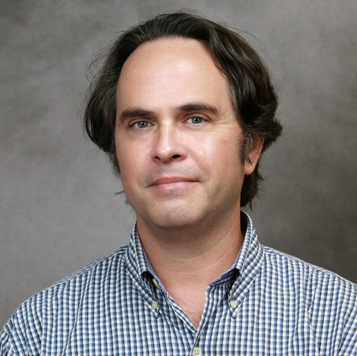
A Georgia native, Stephen D. Turner moved to Nashville in 2023 with his partner of over thirteen years. When he isn’t hiking in the woods or enjoying the ocean, Stephen is a musicologist and tubist who teaches music at Tennessee State University.


Isn’t amazing that our two major chamber groups started their seasons with Brahms’ Clarinet Trio Op. 114? I love Nashville!
https://www.musiccityreview.com/qats