Advertisement 
Vocal Arts Nashville Kicks Off 10th Season with “Sound from Silence”

Vocal Arts Nashville (VAN) is the undiscovered gem of Middle Tennessee classical music. The group is made up of local professionals, professors, Nashville Opera chorus regulars, and wildly talented amateurs. Directed by Dr. Lesley Mann, the group kicked off their tenth season in late September at Vine Street Christian Church with a program titled “Sound from Silence.”
I was intrigued at the concept of sixty minutes of music dedicated to the topic of silence and Vocal Arts Nashville structured the concert well with four sections labeled as: “Silence as Conversation,” “Silence as Theme,” “Silence as Rhythm,” and “Silence as Sound.” Each section featured two pieces, except for the last section which had four.
Composers have long been grappling with the idea of silence and have taken many different approaches. Franz Schubert in Winterreise uses repetition and a drone to create the illusion of silence, Luigi Nono wrote political protest works with chorus members whispering their dissent. And who can forget John Cage’s 4’33” which leaves half the audience wondering how to properly define music and the other half wondering why they paid money for the concert in the first place. The approach that VAN opted for in each section sometimes strayed from the concept of silence, but each piece was masterfully performed.

“Silence as Conversation” started off with Hans Leo Hassler’s 1591 motet “Verbum Caro Factum Est,” a flowing piece which sets the text of John 1:14: “The word was made flesh and dwelt among us, and we beheld His glory, the glory of the only-begotten of the Father full of grace and truth.” There were a few intonation bumps in this fast-paced motet, but very quickly they were resolved as the group settled into the piece. Following that piece was “Hail Gladdening Light” by Charles Wood, teacher of Ralph Vaughn Williams. Written for a double choir in 1919, the piece stylistically shares much with “Verbum Caro Factum Est” despite their 300-year gap. VAN gave a very strong performance with this one, including a masterfully done climax on “We hymn the Father, Son, and Holy Spirit” that was musically overwhelming within the lovely Vine Street Church. Hearing a sacred piece in the intended space is always an additional pleasure.
“Silence as Theme” was my favorite portion of the evening, and the most successful thematically. “A Silence Haunts Me” by Jake Runestad, opened this portion, which is a setting of words by poet Todd Boss and from Beethoven’s “Heiligenstadt Testament.” The Heiligenstadt Testament is a letter that Beethoven wrote in the year 1802 to his brothers, but he never sent. In it Beethoven reflects on his worsening deafness and how he is embarrassed by his condition. He contemplates suicide, but ultimately feels he is responsible to the musical gift that God has given him, and strives to overcome any physical ailment. The fact that this letter was written in 1802 is rather remarkable knowing that at that point Beethoven had only written his first Symphony and his first Piano Concerto. With the overwhelming majority of his music yet to be written, the Heiligenstadt Testament is remarkable in its candid depiction of Beethoven’s humanity.
I found Runestad’s music to be occasionally frustrating: moments of great awe were followed by kitsch. There are snippets from Beethoven’s symphonies (3rd, 6th, and the “Ode to Joy” from the 9th) and the Moonlight Sonata woven throughout the score in what seemed to serve no purpose other than the referential. Despite all of this, Runestad is able to craft a devastating piece of drama. With the full power of VAN pleading “Take my feeling, take my sight, take my wings mid-flight, but let me hear, let me hear, let me hear the searing roar of air before I score the ground” you can’t help but be moved by the pathos of the moment. The piece ends with the ensemble silently mouthing “Be Well” repeatedly, complete with the pianist miming playing chords and making no sound. Compositionally this fell flat – mainly because the triumph of Beethoven is that he overcame his ailments and was not ultimately defeated by them. Nevertheless, the audience was stunned by the piece and did not clap at the end – too afraid to break the silent spell. This felt appropriate for the moment, but the piece definitely deserved applause as it was wonderfully performed.

Eric Whitacre’s “Enjoy the Silence” was next and was a setting of Depeche Mode’s song of the same name. This seems like an odd pairing, but Whitacre’s version is thoroughly his own. His staple sound of clustered harmonies, extended suspensions, and musical swells were brought forth with confidence from VAN.
“Silence as Rhythm” was the most fun portion of the evening, which was a great change of pace from the first two sections. Nilo Alcala’s “Gloria” is a lovely setting of the “Gloria in excelsis Deo” prayer that has had countless musical settings over the years. The piece opens with fast rhythmic patterns that build up layer upon layer as Alcala works through the poem. Within this structure Alcala also has musical modes typically associated with the East throughout. I thought this was a particularly interesting device because it combines Eastern modal harmonies within a typically western text – perhaps symbolizing the message that the Angels have brought the Gospel to all ends of the Earth. “Noche de Lluvia” by Sid Robinovitch is a lovely setting of a love poem with one lover telling the other “Wait, do not sleep…Let us listen to the rhythm of the rain.” VAN approached it with the appropriate groove needed for this piece and enchanted the audience. In this piece there was a wonderful union of a well-crafted piece combined with adept performers that makes a truly magical moment.
The final stretch of the concert included four pieces: “Moonlight Sound Design” by Raimonds Riguls (which featured Christine Comer on Vibraphone), “His Voice as the Sound” arranged by Alice Parker and Robert Shaw, “I’m Gonna Sing ‘til the Spirit Move in My Heart” by Moses Hogan, and “I Can Sing” by Carlos Corderos. Each of these short pieces were a celebration of music and the joy in the gift of singing. The Moses Hogan piece was an audience favorite, mainly because the ensemble itself was having so much fun performing the spiritual influenced piece. Throughout the evening Andrew Risinger accompanied the group on Piano and was a welcome addition. His playing always supported the group delicately and added wonderful color to the performance.
This was such a strong start to their tenth season, and I hope that every concert of theirs going forward is filled more and more with audience members. Vocal Arts Nashville has two more concerts this season: “Turning of the Year” in December and “Reflections” in April. Additionally they recorded an album of Elaine Hagenberg’s music that is available for purchase both digitally or physically. I would encourage you to support this group in any way, and I look forward to seeing more of them this coming season.
- About the Author
- Latest Posts
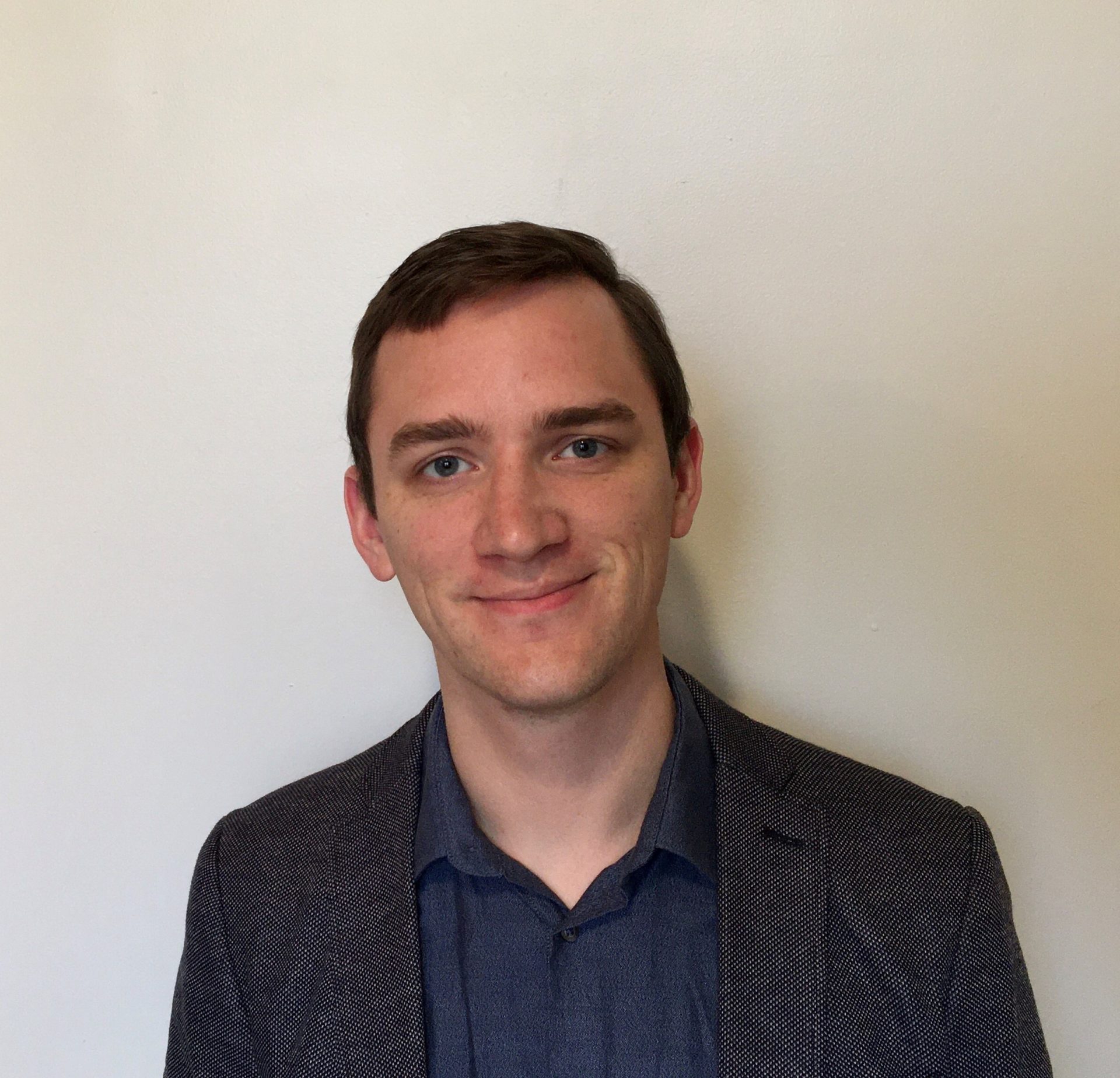
Daniel Krenz is a conductor and composer currently living in Nashville. Currently he serves as the Music Director for the Blueprint Ensemble, a collective dedicated to playing and placing Art music, both new and old, in exciting and refreshing contexts.